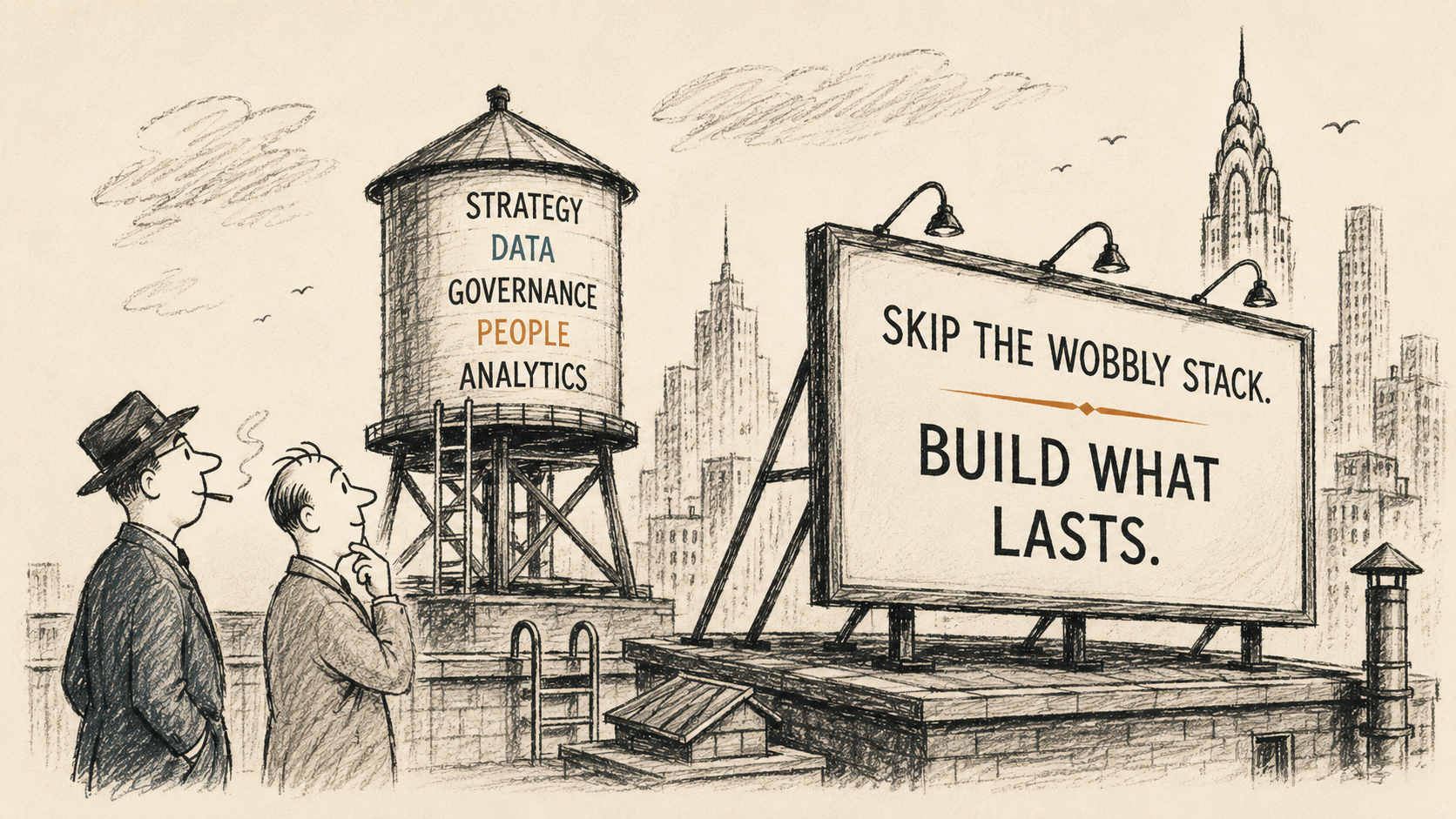
The world is going all in on AI.
We're going all in on what AI is actually built on.
There are more model providers right now than there are Aloha shirts in David's closet, and that is saying something. Frontier models drop every other Tuesday. AI is the marketing term of the decade — possibly the most successful one ever written. And yet, for all the GPUs being lit on fire, an astonishing number of companies are quietly discovering that their grand AI ambitions are running aground on the same boring, foundational, unglamorous thing they've been ignoring for years.
Their data.
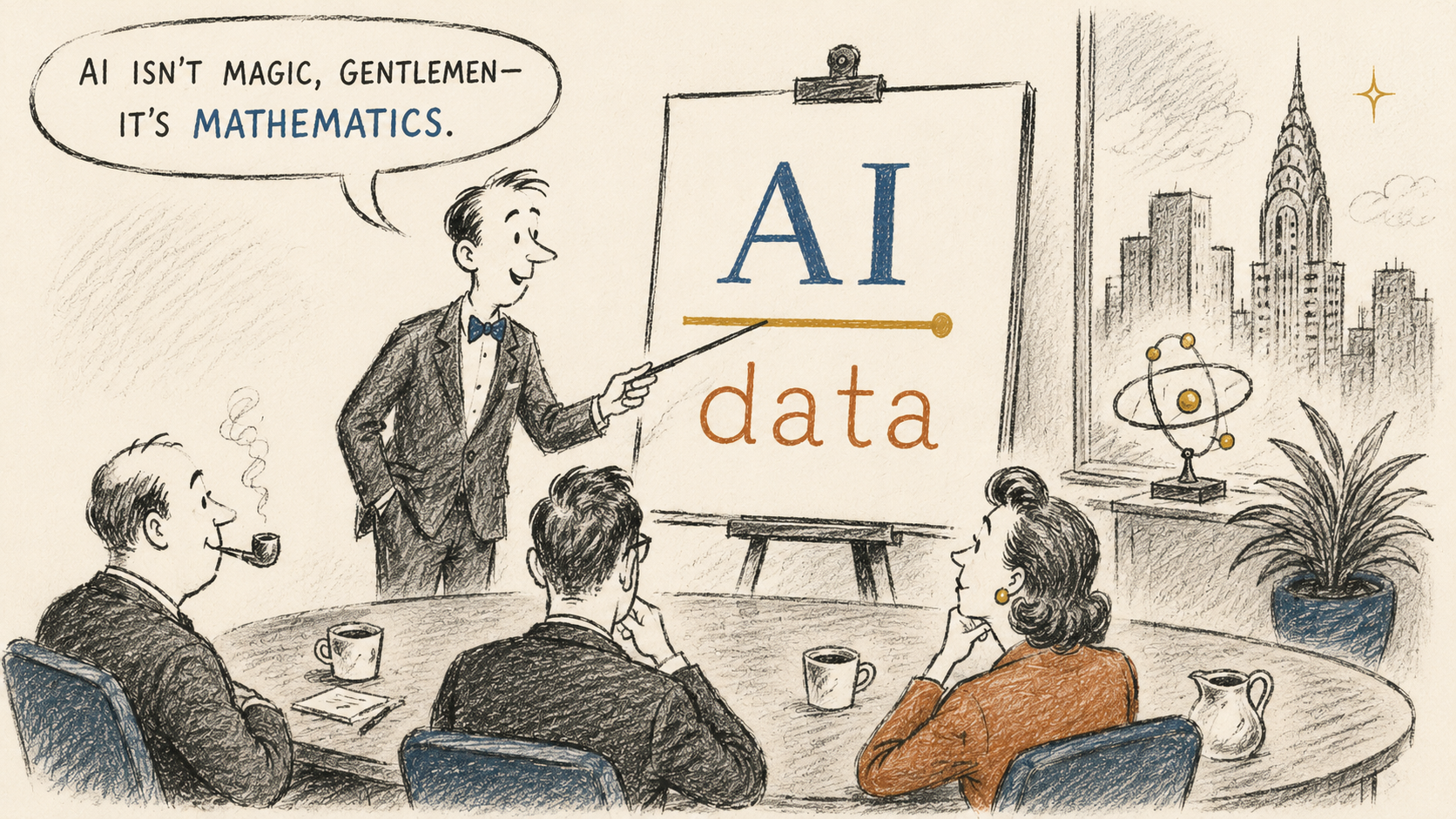
AI is built on data. Without good data, the world's most capable model is an expensive autocomplete with a confident voice. The companies that win the next decade will not be the ones with the most model subscriptions. They will be the ones who took the foundation seriously while everyone else was chasing the shiny thing on top of it.
That's us. That's why we exist.
And yes — look at the name again. All In spells AI. AI on Data. That isn't a marketing gimmick. It's the thesis.
Who We Are
We are Peter Memon and David Gleason. We met a long time ago, back when we both wore suits and ties to work every day. Neither of us remembers how to knot a tie anymore, and David has since fully committed to Aloha shirts (Hawaiian shirts, technically — but he will correct you, repeatedly, that the proper term is aloha, and the good ones are still stitched in Hawaii by a handful of small shops that have somehow survived the global supply chain).
Peter spent more than thirty years inside the world's largest banks, first designing global trading systems and then, fifteen-odd years ago, pivoting to analytics and big data and never looking back. David spent two decades in consulting and another stretch on Wall Street, mostly as a Chief Data and Analytics Officer at large global banks — the kind of role where, on the harder days, you joke that you are really the company's chief psychiatrist, patiently convincing everyone that data is, in fact, a strategic asset and not a side effect of running the business.
Between us we have somewhere north of sixty years of doing this work in environments where doing it wrong has consequences measured in regulators, headlines, and a great many zeros. We have opinions. They are strong. We try to be charming about them.
What We Believe
Your AI strategy is your business strategy. Not a sub-strategy. Not an IT initiative someone handed to the CIO so the rest of the C-suite could get back to the "real" work. If you cannot draw a straight line from an AI investment to the business outcome it serves, you are not doing AI — you are doing theater with a GPU bill. AI is a business play supported by some genuinely remarkable technology. It is not a technology play that the business is occasionally consulted on.
The shiny model is not the point. A new frontier model arrives every few weeks. Each is more impressive than the last. Each is also, increasingly, a commodity. The competitive moat is not which model you licensed. It is the quality of the data you feed it, the rigor of the strategy that surrounds it, and the discipline of the people who deploy it.
Sometimes you don't have an AI problem. You have a data problem. Or an analytics problem. Or — often enough — a perfectly ordinary business problem dressed up in AI clothing because that's what gets the budget approved. We will tell you. We have told CEOs that the thing they came in asking for is not the thing they should be paying for. Most of them appreciate it. The ones who don't are not generally our clients for very long, and that is fine.
AI is an amplifier, not a magic wand. It amplifies clarity into compounding advantage. It also amplifies confusion into expensive, automated confusion. Plenty of companies are learning this the hard way. We would rather you learn it from us, for considerably less.
People are not going anywhere. The narrative that AI is about to vaporize the workforce makes for excellent headlines and dreadful strategy. AI reshapes jobs; it does not eliminate them at the scale the doomsayers are selling. The companies that get this right will use AI to extend their best people. The ones that get it wrong will, in three years, look around and realize they fired the people who actually knew how anything worked.
Inertia kills. We are going to put this on a t-shirt eventually. Change is hard, especially at organizations whose quarterly numbers are flattering enough to make change seem optional. It is not optional. The companies that wait for the gun-to-the-head moment are the ones future MBA students will read about in chapters with unkind titles.
How We Work
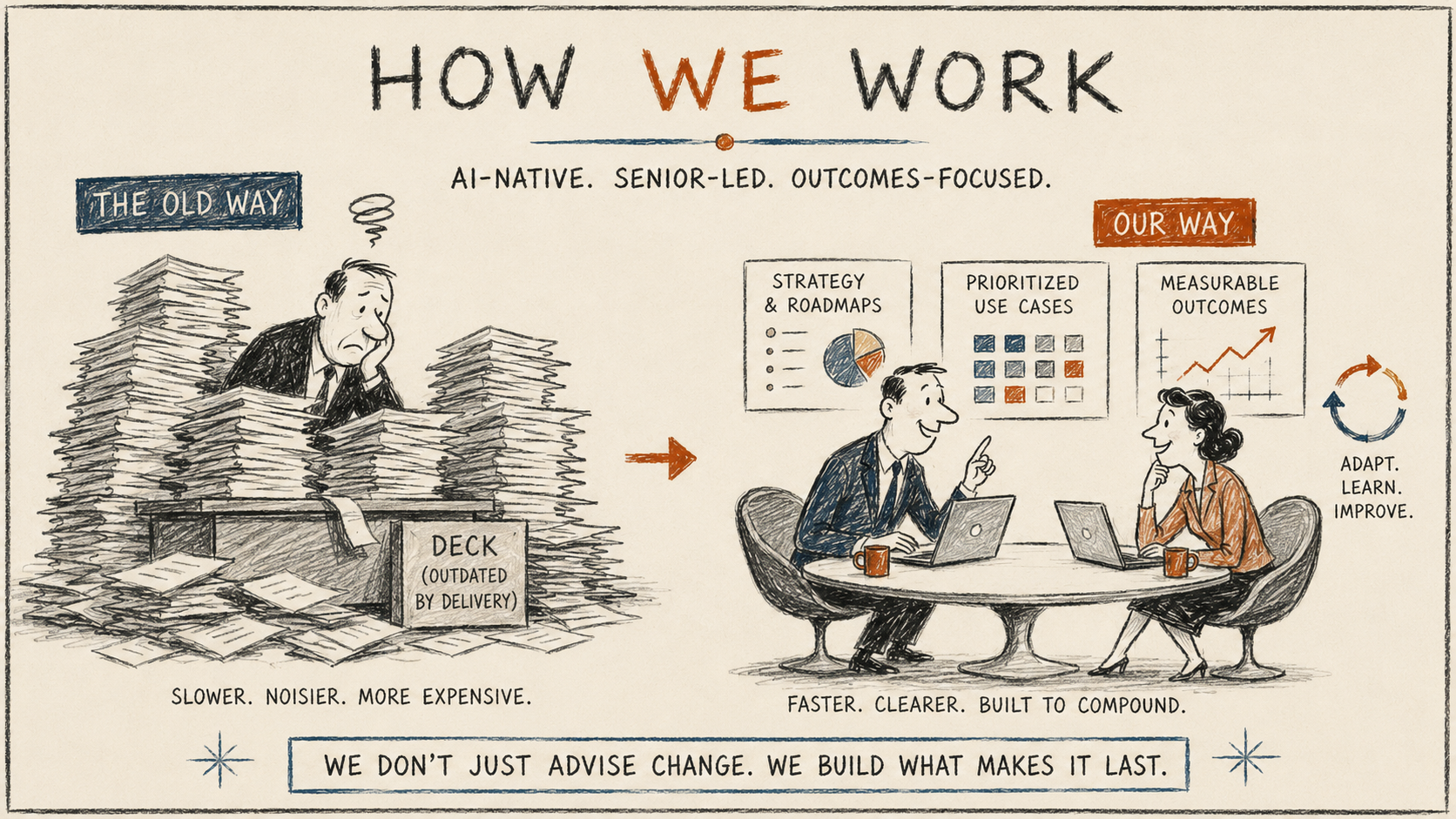
The traditional consulting model is, frankly, broken. Sell the engagement at the partner level. Staff it with a pyramid of less-experienced consultants. Spend several months gathering information through interviews. Hand over a deck. Sell the reassessment six months later. Repeat. We have both spent enough years inside that machine to know exactly where it creaks.
So we built something different.
All In On Data is AI-native from the inside out. We do not sprinkle AI onto our deliverables. We use it as the operating model of the firm itself. That lets us extend the reach of senior expertise — the people you actually wanted when you signed the contract — directly to the work, without the layers of translation in between. It compresses time-to-value. It turns assessments and roadmaps into living artifacts rather than PDFs that age badly in a SharePoint folder. And it lets us do for our clients exactly what we tell our clients to do for themselves: use AI to amplify your best, not to replace your average.
What that looks like in practice:
We build data and AI strategies that are written down, made explicit, and tied to business outcomes — across the six pillars we've come to believe are non-negotiable: strategic alignment, governance, data management, data quality, AI and analytics development, and the people-and-culture work that everyone underestimates and everyone needs.
We run assessments worth keeping: real diagnoses of where your data, your capabilities, and your organization actually are — not where the org chart says they should be — and then we tell you the truth about it.
We lead implementations that don't outrun the foundation, built for time-to-value, delivered in iterations, with the discipline to not let the first wins become the ceiling of your ambition.Ciao.
And we have the conversations no one else is willing to have — with your board, your executives, and your people — about what AI really changes, what it doesn't, and what you owe the humans inside your organization while you figure it out.
Let's Talk
If you've read this far, you are either evaluating us or you have found yourself agreeing more than you expected. Either way, the next step is the same.
Send us a note. Tell us what you're working on. We'll tell you, honestly, whether we are the right people to help — and if we're not, we'll tell you that too.
The world is going all in on AI.
We'd like to help you do it well.