Chapter 21: Autonomous Systems Will Reshape Your Business
AI won't just speed up your tasks; it will automate entire workflows. Discover the capacity multiplication effect of the agentic revolution.
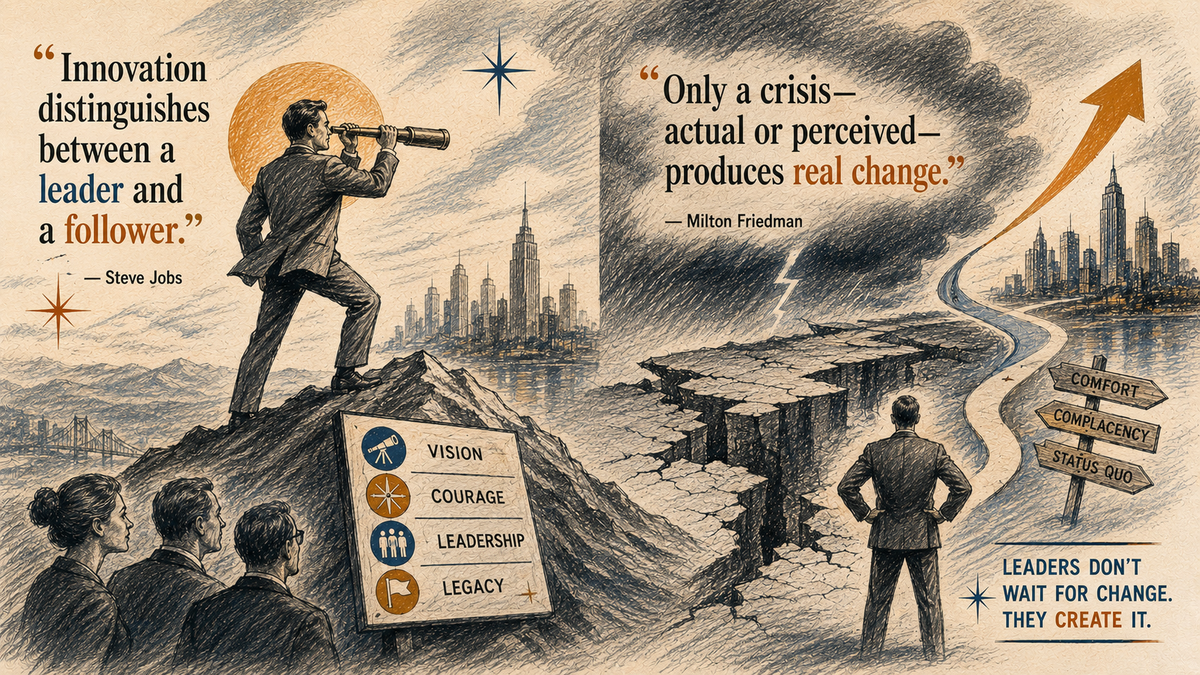
"Innovation distinguishes between a leader and a follower." — Steve Jobs
"Only a crisis—actual or perceived—produces real change." — Milton Friedman
The future of business isn't just being written—it's being coded, one autonomous agent at a time. We stand at the precipice of what Vinod Khosla of Khosla Ventures calls the most significant transformation in business history. At the Effortless Bay Area 2024 conference, Khosla made one of the boldest predictions in modern business: "AI will automate 80% of high-value jobs by 2030, fundamentally altering the workforce landscape." More provocatively, he envisions "a new class of 'organizational-level AI' that will not only aid but essentially run entire enterprises, optimizing processes and replacing countless managerial tasks."
This isn't hyperbole. This is the new reality where venture capitalists see trillion-dollar disruption potential, where your business processes will increasingly be managed by digital workers that never sleep, never call in sick, and continuously optimize their performance. These aren't the rigid, rule-based automation systems of yesterday—these are intelligent agents that can reason through complex scenarios, adapt to changing conditions, and collaborate with both humans and other agents to achieve sophisticated business outcomes.
The debate is no longer about whether this transformation will occur—it's about timing. The direction is set. The question that will determine the fate of your organization is whether you'll be leading this revolution or struggling to catch up with those who started earlier.
A Mathematical Framework for Organizational Transformation
Understanding the true economic impact of agentic transformation requires grasping what we call the "capacity multiplication effect"—a phenomenon that fundamentally differs from traditional productivity improvements. While conventional efficiency gains focus on making existing tasks faster, the capacity multiplication effect eliminates entire categories of low-value work to free human cognitive resources for high-value activities that were previously impossible to pursue.
Consider the profound implications of this shift through a concrete example. A senior director earning $300,000 annually in a typical organization might allocate their time as follows: 30 hours weekly in low-value meetings (status updates, coordination calls, information sharing), 20 hours on administrative tasks (reporting, documentation, scheduling), 10 hours on strategic thinking and complex problem-solving, and 10 hours on relationship building and team development.
In this scenario, only 20 hours weekly leverage the director's true cognitive capabilities—their ability to think strategically, solve complex problems, and develop human relationships. The remaining 50 hours represent what we might call "cognitive underutilization"—expensive human intelligence being applied to tasks that don't require human-level reasoning.
Now imagine deploying sophisticated agents to handle meeting coordination, status synthesis, administrative workflows, and information aggregation. The director's time allocation transforms dramatically: 5 hours on essential human-only meetings, 5 hours on agent oversight and direction, 30 hours on strategic analysis and complex problem-solving, and 30 hours on relationship building and team development.
This transformation doesn't merely save time—it multiplies the organization's capacity for high-value work by a factor of three or four. The director becomes capable of tackling strategic challenges that were previously impossible due to time constraints. They can pursue market opportunities that require deep analysis, develop sophisticated competitive strategies, and invest in team development that creates long-term organizational capability.
The economic implications become staggering when scaled across an organization. Tobi Lütke, Shopify's CEO, has already implemented policies that recognize this reality. In April 2025, he posted: "Before asking for more headcount and resources, teams must demonstrate why they cannot get what they want done using AI… What would this area look like if autonomous AI agents were already part of the team?"
Lütke's approach reflects a fundamental shift in how organizations think about capacity and capability. Rather than adding human resources to handle increased workload, organizations can multiply their existing human capacity through agent augmentation. A company with 100 senior managers experiencing this capacity multiplication effect doesn't just save on coordination costs—it suddenly has the equivalent of 300 or 400 senior managers worth of strategic thinking capacity without adding headcount.
This represents a new economic model where the most valuable human cognitive resources are freed from routine coordination and administration to focus entirely on activities that create competitive advantage. The capacity multiplication effect enables organizations to tackle challenges and opportunities that were previously economically infeasible, fundamentally changing what's possible within existing resource constraints.
Assessment and Adaptation
The agentic revolution will create winners and losers within organizations, and successful leaders must confront this reality with both strategic clarity and human compassion. The traditional approach to technological change—assuming that with adequate training and support, most employees can successfully transition to new ways of working—may prove inadequate for the scale and pace of agentic transformation.
Organizations must develop honest, objective assessment frameworks that evaluate several critical dimensions simultaneously. First, there's cognitive flexibility—the ability to learn new conceptual frameworks and adapt existing mental models. Some employees excel at this type of learning, while others struggle when fundamental assumptions about how work gets done are challenged. Second, there's comfort with ambiguity and autonomous systems. Agent-augmented work often requires making decisions based on agent recommendations without complete understanding of the underlying reasoning. Some employees can develop appropriate trust calibration for these situations, while others may never feel comfortable delegating important decisions to autonomous systems.
Third, there's the ability to think abstractly about process design and optimization. Working effectively with agents requires understanding how to structure tasks and workflows to leverage agent capabilities. This represents a different skill set than performing the tasks themselves—it's more akin to management and orchestration than execution.
The assessment process must be conducted early in the transformation timeline, allowing for targeted training investments and realistic workforce planning. Organizations that acknowledge upfront that some employees may not successfully transition can invest more heavily in those most likely to succeed while providing realistic timeline expectations and transition support for those who may need to pursue different career paths.
This brutal honesty, while difficult, enables more effective resource allocation and change management. It also allows organizations to identify high-potential employees who can become internal champions and trainers for agentic systems, accelerating the overall transformation process.
From Afterthought to Strategic Imperative
The inadequacy of typical organizational training becomes a critical barrier during agentic transformation. Most corporate training programs operate on the flawed assumption that employees will gradually develop new skills through experience and on-the-job learning. This casual approach may work for incremental skill development, but it's entirely inadequate for the fundamental cognitive shifts required by agent-augmented work.
The training challenge is compounded by the fact that most employees have no existing mental models for working with autonomous systems. Unlike learning a new software application where you can build on existing computer literacy, working with agents requires developing entirely new conceptual frameworks for how work gets structured and value gets created.
Effective training programs must address multiple layers simultaneously. At the foundational level, employees need to understand what agents can and cannot do, how to recognize tasks that are well-suited for agent automation, and how to design processes that leverage agent capabilities effectively. At the operational level, employees need hands-on experience with agent management, including how to set appropriate goals and constraints, how to interpret agent outputs and recommendations, and how to maintain appropriate oversight of autonomous systems.
At the strategic level, employees need to develop the ability to think systematically about how agent capabilities can be applied to solve complex business problems. This requires understanding not just individual agent capabilities, but how multiple agents can be coordinated to tackle sophisticated challenges.
The training must also address the psychological aspects of working with autonomous systems. Many employees will initially feel uncomfortable delegating important tasks to agents, even when those agents can perform the tasks more effectively than humans. The training needs to help people develop appropriate trust calibration and comfort with the ambiguity that comes with autonomous decision-making.
Organizations should consider intensive, immersive training programs that operate more like professional development bootcamps than traditional corporate training. These programs should include extended simulations where employees work with agent systems on realistic business challenges, allowing them to develop both technical skills and psychological comfort with agent collaboration.
The training investment must be substantial and sustained. Organizations that treat agentic transformation training as a one-time event will find themselves with workforces that never fully adapt to agent-augmented work. The training should be ongoing, with regular refreshers and updates as agent capabilities evolve and new use cases emerge.
Data Engineering and Pipeline Management
One of the most compelling early applications of agentic AI has emerged in data engineering, where agents can autonomously manage complex data pipelines that adapt to changing data sources, formats, and business requirements. Traditional data pipelines are brittle—they break when source systems change formats, when new data sources are added, or when business logic evolves.
Agentic data pipeline systems operate differently. When a source system changes its data format, the agent detects the change, analyzes the new structure, and automatically adapts the pipeline to maintain data flow. When data quality issues arise, the agent can reason about potential causes, implement temporary workarounds, and alert relevant teams with specific recommendations for permanent solutions.
A global manufacturing company recently deployed an agentic data management system that monitors dozens of factory systems across multiple countries. When production line sensors began reporting anomalous readings from a facility in Germany, the agent didn't simply flag an error. It correlated the readings with maintenance schedules, weather data, and production targets, determined that a sensor calibration was likely causing false readings, and automatically adjusted data processing algorithms while scheduling a maintenance check. The entire process occurred without human intervention, preventing both data corruption and unnecessary production line downtime.
Customer Service and Support Optimization
Customer service represents another domain where agentic capabilities are transforming traditional approaches. Rather than simply routing customer inquiries or providing scripted responses, agentic customer service systems can orchestrate complex support experiences that span multiple channels, departments, and timeframes.
Consider a customer who contacts support about a billing discrepancy. A traditional system might create a support ticket and route it to the billing department. An agentic system reasons about the customer's complete relationship with the company, analyzes their account history, identifies potential root causes for the discrepancy, and coordinates a response strategy that might involve multiple departments.
The agent might determine that the billing issue stems from a recent service upgrade that wasn't properly reflected in the billing system. Rather than simply correcting the current bill, the agent identifies other customers who might be affected by the same issue, coordinates with the technical team to fix the underlying system problem, and proactively contacts potentially affected customers with explanations and account credits.
This type of proactive, reasoning-based customer service creates significantly better customer experiences while reducing the overall support burden on human teams.
Financial Analysis and Decision Support
Financial analysis presents complex challenges that are well-suited to agentic approaches. Financial decisions often require synthesizing information from multiple sources, understanding complex interdependencies, and reasoning about uncertain future scenarios.
An investment management firm has deployed agentic systems that continuously monitor market conditions, company performance metrics, and macroeconomic indicators to identify investment opportunities and risks. The agents don't simply flag when predetermined thresholds are crossed—they reason about market dynamics, identify emerging patterns, and recommend strategic adjustments based on comprehensive analysis.
When emerging market volatility began affecting portfolio performance, the agentic system didn't just report losses. It analyzed correlation patterns across different asset classes, identified which positions were likely to be most affected by continued volatility, modeled potential hedging strategies, and recommended specific trades to minimize risk while maintaining upside potential. The recommendations included detailed reasoning and risk assessments that helped portfolio managers make informed decisions quickly.
Supply Chain Optimization and Risk Management
Supply chain management represents one of the most complex orchestration challenges in business, involving multiple vendors, transportation systems, regulatory requirements, and demand fluctuations. Agentic systems are beginning to demonstrate remarkable capabilities in managing these complex, interconnected systems.
A consumer electronics manufacturer has implemented an agentic supply chain management system that continuously optimizes procurement, production scheduling, and distribution based on real-time demand signals and supply chain conditions. When COVID-19 restrictions began affecting component suppliers in Southeast Asia, the agent system didn't wait for shortages to manifest.
The agents analyzed supplier locations, transportation routes, and alternative sourcing options. They identified components that were likely to face shortages, found alternative suppliers, and negotiated temporary contracts to ensure production continuity. The system also analyzed downstream effects, adjusting production schedules to prioritize products with the highest profit margins and longest component lead times.
Most importantly, the agentic system coordinated these activities across multiple departments and external partners, ensuring that procurement decisions aligned with production capabilities, transportation capacity, and customer commitments.
The Multi-Agent Orchestra: Collaborative Intelligence
The true power of agentic AI emerges not from individual agents working in isolation, but from teams of specialized agents collaborating to tackle complex business challenges. This multi-agent approach mirrors how human organizations operate—different specialists contribute their expertise while coordinating toward shared objectives.
Specialized Agent Roles and Capabilities
In sophisticated agentic systems, different agents develop specialized capabilities and knowledge domains. A marketing analysis agent might become expert at interpreting customer behavior patterns and campaign performance metrics. A financial modeling agent might specialize in risk assessment and investment analysis. A operational efficiency agent might focus on process optimization and resource allocation.
These specialized agents can collaborate on complex projects that require multiple types of expertise. When developing a new market entry strategy, the marketing agent might analyze customer segments and competitive dynamics, the financial agent might model investment requirements and revenue projections, and the operational agent might assess production and distribution capabilities.
The collaboration happens through sophisticated communication protocols that allow agents to share insights, request specific analyses, and coordinate their activities. Unlike traditional software integration, this collaboration is dynamic and adaptive—agents can form new working relationships based on the needs of specific projects.
Orchestrator Agents
In complex multi-agent systems, specialized orchestrator agents manage the coordination and communication between different specialist agents. These orchestrator agents understand the capabilities of different specialists and can dynamically assemble teams for specific projects.
When a complex business challenge arises, the orchestrator agent analyzes the requirements, identifies which specialist agents are needed, and coordinates their collaboration. It ensures that agents have access to the information they need, manages conflicting recommendations between different specialists, and synthesizes their outputs into actionable insights.
A global consulting firm has implemented an orchestrator agent that manages strategic analysis projects. When clients request market entry assessments, the orchestrator automatically assembles teams of specialized agents: market research agents analyze customer needs and competitive landscapes, regulatory agents assess compliance requirements, financial agents model investment scenarios, and operational agents evaluate implementation challenges.
The orchestrator manages the entire project timeline, ensures that different agents have access to relevant information, identifies when additional analysis is needed, and produces comprehensive strategy recommendations that integrate insights from all specialist agents.
Dynamic Team Formation and Dissolution
One of the most sophisticated aspects of multi-agent systems is their ability to form and dissolve teams dynamically based on changing project requirements. Unlike traditional software systems that require predetermined integration, agentic systems can adapt their collaboration patterns based on the needs of specific situations.
When a supply chain disruption occurs, agents specialized in different aspects of supply chain management might spontaneously collaborate to develop response strategies. Procurement agents might identify alternative suppliers, logistics agents might optimize transportation routes, and customer service agents might proactively communicate with affected customers. As the disruption is resolved, these temporary collaboration patterns dissolve, with agents returning to their normal operational patterns.
This dynamic team formation means that agentic systems can scale their collaborative capabilities up and down based on demand, automatically bringing additional expertise to bear on complex problems while maintaining efficient operations during normal periods.
From Reactive to Proactive Operations
The implementation of agentic systems fundamentally transforms how business processes operate, shifting from reactive, human-managed workflows to proactive, intelligently orchestrated operations that anticipate and prevent problems rather than simply responding to them.
Predictive Process Management
Traditional business processes are largely reactive. Problems are identified after they occur, inefficiencies are addressed when they become apparent, and opportunities are pursued when they're discovered. Agentic systems enable a shift toward predictive process management, where potential issues are identified and addressed before they impact operations.
A manufacturing company has implemented agentic process management systems that continuously monitor production line performance, supplier reliability, and quality metrics. Rather than waiting for quality issues to be detected through inspection, the agents analyze patterns in sensor data, supplier performance, and environmental conditions to predict when quality problems are likely to occur.
When patterns suggest that a particular production line is trending toward quality issues, the agents don't wait for problems to manifest. They automatically adjust process parameters, schedule preemptive maintenance, or temporarily shift production to alternative lines. The result is significantly improved quality consistency and reduced waste, achieved through proactive rather than reactive management.
Intelligent Exception Handling
One of the most valuable aspects of agentic process management is sophisticated exception handling that goes far beyond simple error reporting. When exceptions occur, agents can reason about causes, evaluate alternative responses, and implement solutions autonomously.
A financial services company has deployed agentic systems that manage complex regulatory reporting processes. When data inconsistencies are detected that could affect regulatory compliance, the agents don't simply flag errors for human resolution. They analyze the nature of the inconsistencies, trace them back to their sources, evaluate the potential compliance implications, and implement corrective actions.
If the issue stems from a data integration problem, the agent might automatically implement data validation rules to prevent similar issues in the future. If the problem is caused by process changes that weren't reflected in reporting systems, the agent coordinates with relevant departments to update procedures and system configurations.
Continuous Process Optimization
Agentic systems enable continuous process optimization that adapts to changing conditions and identifies improvement opportunities that might not be apparent to human observers. Rather than relying on periodic process reviews, agents continuously analyze performance patterns and experiment with optimizations.
A logistics company has implemented agentic route optimization systems that continuously learn from delivery performance, traffic patterns, customer preferences, and driver feedback. The agents don't simply follow predetermined routes—they continuously experiment with variations, analyze the results, and adapt routing strategies based on real-world performance.
When the agents identify that certain delivery routes consistently experience delays during specific time periods, they don't just avoid those times. They analyze the causes of delays, coordinate with customers to adjust delivery preferences, and optimize routes across the entire network to minimize overall delivery times while maintaining cost efficiency.
Economics of Agentic Transformation
The economic implications of agentic AI extend far beyond simple cost reduction or efficiency improvements. These systems fundamentally change the economics of business operations by enabling new types of value creation that weren't previously possible at scale.
The Productivity Multiplier Effect
Unlike traditional automation that typically replaces human tasks with mechanical equivalents, agentic systems create a productivity multiplier effect by augmenting human capabilities with intelligent assistance that can handle complex, context-dependent work.
A consulting firm has implemented agentic research and analysis systems that support their strategic consulting practice. Rather than replacing consultants, the agents handle much of the data gathering, preliminary analysis, and research coordination that typically consumes significant consultant time. This allows senior consultants to focus on client interaction, strategic thinking, and complex problem-solving while the agents handle the supporting analytical work.
The result isn't just efficiency—it's a fundamental enhancement of the firm's capabilities. Consultants can tackle more complex projects, provide deeper insights, and serve more clients because the agents handle much of the routine analytical work that previously limited their capacity.
Quality Enhancement Through Consistency
Agentic systems enable quality improvements that are difficult to achieve through traditional automation or human-only processes. Because agents can consistently apply sophisticated reasoning and maintain comprehensive awareness of context and constraints, they can achieve levels of quality consistency that are challenging for human-only processes.
A legal services firm has implemented agentic contract analysis systems that review complex commercial agreements for potential risks and opportunities. The agents don't simply identify standard clause problems—they analyze contract terms in the context of the client's business model, regulatory environment, and strategic objectives.
The agents consistently identify potential issues that might be missed in human-only reviews, such as conflicts between different contract sections, terms that might create future compliance challenges, or clauses that could limit future business flexibility. The result is higher quality contract analysis that reduces legal risks and identifies opportunities for more favorable terms.
Scale Economics: Capability Extension Rather Than Cost Reduction
Perhaps the most significant economic impact of agentic systems is their ability to extend organizational capabilities to address problems and opportunities that were previously economically infeasible. Rather than simply reducing the cost of existing operations, agents enable organizations to tackle challenges that require more coordination, analysis, or sustained attention than human-only approaches can practically provide.
A market research firm has implemented agentic systems that continuously monitor competitive intelligence across dozens of industries and hundreds of companies. The agents track product announcements, patent filings, hiring patterns, market sentiment, and strategic partnerships to identify emerging competitive threats and opportunities.
This type of comprehensive, continuous competitive intelligence would be prohibitively expensive using traditional human-only approaches. The agentic systems make it economically feasible to maintain sophisticated competitive awareness that enables the firm to identify emerging market opportunities and threats much earlier than would otherwise be possible.
Implementation Realities: Navigating the Practical Challenges
While the potential of agentic AI is transformative, successful implementation requires navigating significant practical challenges that go beyond simply deploying new technology. Organizations must address infrastructure requirements, change management challenges, and integration complexities that are unique to agentic systems.
Infrastructure and Integration Requirements
Agentic systems require robust, flexible infrastructure that can support dynamic tool use, inter-agent communication, and continuous learning. Unlike traditional software deployments that connect predetermined systems in predetermined ways, agentic systems need infrastructure that can adapt to changing collaboration patterns and tool requirements.
Organizations must invest in API-first architectures that enable agents to dynamically discover and use different tools and services. They must implement security frameworks that can handle agents acting autonomously on behalf of users and departments. They must establish monitoring and governance systems that can track agent activities and ensure that autonomous actions align with organizational policies and objectives.
A financial services company spent eighteen months preparing their infrastructure for agentic deployment, implementing new API management systems, upgrading security frameworks, and establishing governance protocols. The infrastructure investment was significant, but it enabled them to deploy sophisticated agentic systems that have transformed their risk management and customer service capabilities.
Change Management and Human Adaptation
The introduction of agentic systems requires more substantial change management than traditional technology deployments because agents fundamentally change how work gets done. Employees must learn to work collaboratively with intelligent systems that can act autonomously and make decisions based on goals rather than predetermined rules.
Organizations must invest in training that helps employees understand how to effectively collaborate with agents, how to set appropriate goals and constraints, and how to monitor and guide agent activities. They must address concerns about job displacement and help employees understand how agentic systems augment rather than replace human capabilities.
A manufacturing company implementing agentic supply chain management systems spent significant time helping procurement specialists understand how to work effectively with agent systems. The training focused not just on using the technology, but on understanding how to set appropriate goals, how to interpret agent recommendations, and how to maintain oversight of autonomous procurement decisions.
Governance and Control in Autonomous Systems
One of the most challenging aspects of agentic implementation is establishing appropriate governance and control mechanisms for systems that operate autonomously. Organizations must balance the benefits of agent autonomy with the need for oversight and control of business-critical operations.
This requires developing new types of governance frameworks that focus on goals, constraints, and outcomes rather than predetermined processes. Organizations must establish mechanisms for monitoring agent performance, ensuring that autonomous decisions align with business objectives, and intervening when agent actions don't produce expected results.
A healthcare organization implementing agentic patient care coordination systems had to develop entirely new governance protocols that ensured patient safety while enabling agents to optimize care coordination autonomously. The governance framework included automated safety checks, continuous performance monitoring, and escalation procedures that ensured human oversight of critical decisions while enabling agents to handle routine coordination tasks autonomously.
Preparing for an Agentic Future
The agentic revolution is not a distant future possibility—it's an emerging reality that is already transforming how forward-thinking organizations operate. The question is not whether agentic systems will reshape business operations, but how quickly organizations can adapt to leverage these capabilities effectively.
Building Agentic Readiness
Organizations that want to succeed in an agentic future must begin building readiness now, even if they're not ready for full-scale agentic deployments. This readiness involves developing the infrastructure, skills, and organizational capabilities that will enable effective agentic system implementation.
Technical readiness includes investing in API-first architectures, establishing robust data management capabilities, and implementing security frameworks that can support autonomous systems. Organizational readiness involves developing change management capabilities, training programs, and governance frameworks that can adapt to agentic operations.
Cultural readiness is perhaps most important—organizations must foster cultures that embrace experimentation, learning, and adaptation. Agentic systems work best in organizations that are comfortable with goal-oriented rather than process-oriented work, that can tolerate the uncertainty inherent in autonomous systems, and that can adapt quickly based on results and feedback.
Strategic Thinking for Agentic Advantage
The organizations that will gain the greatest advantage from agentic systems are those that think strategically about how these capabilities can create new sources of competitive advantage rather than simply improving existing operations.
This requires identifying business challenges and opportunities that are currently constrained by coordination complexity, analytical requirements, or scale limitations—areas where agentic capabilities can enable entirely new approaches rather than simply automating existing processes.
Organizations should begin experimenting with agentic systems in areas where the potential for learning is high and the risk of failure is manageable. These experiments should focus on understanding how agentic capabilities can address fundamental business challenges rather than simply improving operational efficiency.
The Imperative for Action
The agentic revolution represents one of those rare technological shifts that fundamentally changes the competitive landscape. Organizations that master agentic capabilities early will gain advantages that will be difficult for followers to overcome. Those that wait too long risk finding themselves unable to compete with organizations that have built their operations around agentic capabilities.
The time for preparation is now. The organizations that begin building agentic readiness today will be the ones that define the competitive landscape of tomorrow. The agentic revolution is not something that will happen to your industry—it's something that your organization can help lead.
The future belongs to organizations that can effectively combine human creativity and judgment with agentic capabilities that extend human intelligence and capability. The question is not whether your organization will eventually adopt agentic systems, but whether you'll be leading the transformation or struggling to catch up with those who started earlier.
The agentic revolution is here. The only question is whether you'll be part of shaping it or subject to its consequences. The choice, and the opportunity, is yours to make.