Chapter 23: Navigating Bias, Privacy, and Societal Impact
Ethical AI isn't about satisfying stakeholders or achieving impossible "bias-free" models. It is about managed transparency, protecting privacy, and surviving regulatory scrutiny.
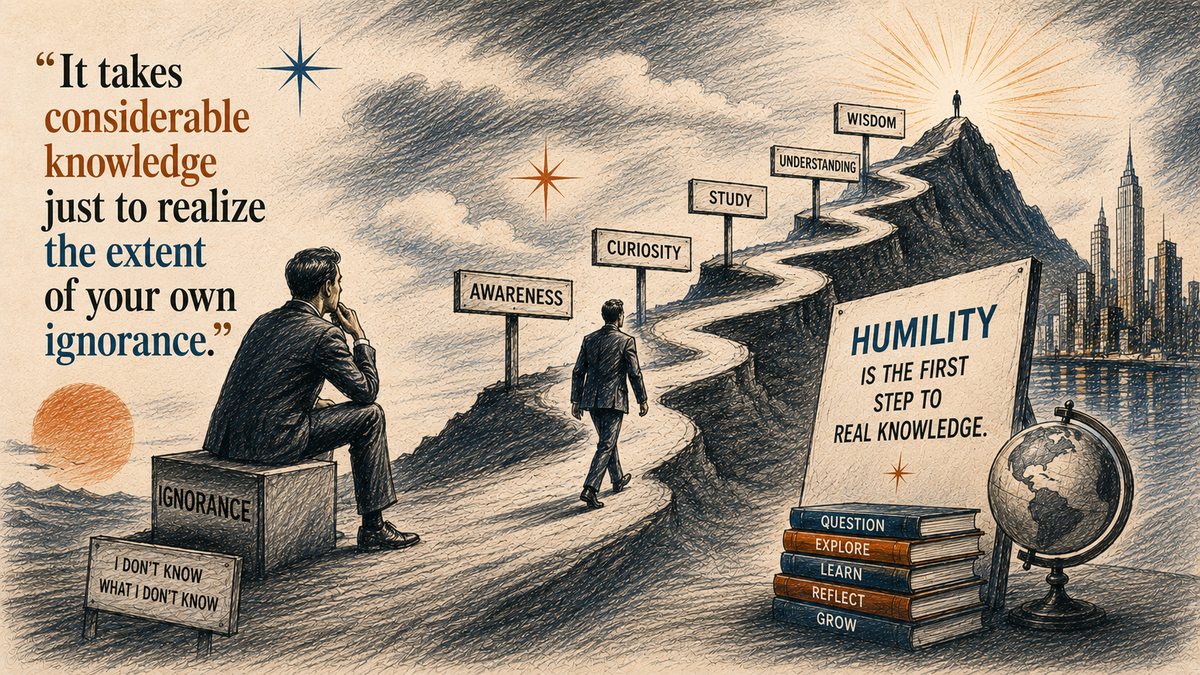
"It takes considerable knowledge just to realize the extent of your own ignorance." – Thomas Sowell
Truth About AI's Moral Landscape
In the gleaming conference rooms where AI strategies are born, there's often an elephant that everyone pretends not to see. While executives debate compute costs and competitive advantages, while engineers fine-tune algorithms and business leaders map transformation roadmaps, the ethical dimensions of artificial intelligence lurk in the shadows—waiting to emerge at the most inconvenient moments with the force of a regulatory sledgehammer or a viral social media storm.
Here's the uncomfortable truth: every AI system you deploy carries within it the potential for tremendous good and devastating harm, often simultaneously. The same technology that can revolutionize healthcare diagnosis can perpetuate systemic discrimination. The same algorithms that enhance customer experience can erode privacy in ways we're only beginning to understand. The same generative models that boost productivity can flood the information ecosystem with sophisticated misinformation.
This isn't a chapter about being nice or checking ethical boxes to satisfy stakeholders. This is about survival in an AI-driven business landscape where ethical failures don't just damage reputations—they destroy companies, trigger regulatory crackdowns, and create existential competitive disadvantages. The organizations that master the ethical dimensions of AI won't just sleep better at night; they'll build more robust, sustainable, and ultimately profitable AI systems.
Business Case for Ethical AI
Let's dispense with the notion that ethics is somehow separate from business strategy. In the AI era, ethical considerations are business considerations, full stop. Consider Amazon's now-infamous recruiting tool that systematically discriminated against women. This wasn't just a "whoops" moment that required a press release and some sensitivity training. It represented a fundamental failure to understand that AI systems don't eliminate human bias—they automate it, scale it, and make it incredibly difficult to detect and correct.
The business implications were immediate and severe. Beyond the reputational damage, Amazon had to scrap years of development work, rebuild their entire approach to AI-assisted hiring, and fundamentally rethink how they approach bias in machine learning systems. Meanwhile, competitors who had invested in ethical AI frameworks from the beginning gained significant advantages in talent acquisition and avoided the regulatory scrutiny that followed.
This pattern repeats across industries. Financial services firms that failed to address algorithmic bias in lending found themselves facing federal investigations and massive settlements. Healthcare organizations that deployed AI systems without proper privacy safeguards discovered that their efficiency gains were wiped out by HIPAA violations and class-action lawsuits. Social media platforms that prioritized engagement over content integrity now face an ongoing regulatory reckoning that threatens their fundamental business models.
The message is clear: ethical AI isn't a luxury for organizations with extra time and budget. It's a competitive necessity for any organization that wants to deploy AI systems at scale without catastrophic risk.
When Reality Meets Ideology
Perhaps no aspect of AI ethics is more misunderstood than the challenge of algorithmic bias. The common misconception is that bias is a technical problem with technical solutions—better algorithms, more diverse training data, cleverer mathematical approaches to fairness. The reality is far more complex and, frankly, more uncomfortable than most organizations are prepared to acknowledge.
Here's the truth that makes everyone squirm: AI systems are mirrors that reflect human behavior and thinking patterns because they're trained on human-generated content. When we train models on historical hiring data, they don't just learn to perpetuate historical hiring biases—they learn to model reality as it actually exists, not as we wish it existed. When we use criminal justice data to predict recidivism, we're not embedding centuries of discriminatory enforcement into algorithmic decision-making—we're capturing patterns that exist in the real world, whether we're comfortable with them or not.
The Amazon recruiting tool example illustrates this perfectly. Amazon's AI wasn't being maliciously discriminatory—it was accurately modeling the reality of who had been successful in technical roles historically. The training data reflected real hiring patterns, real career progressions, and real outcomes. The problem wasn't that the data was biased; the problem was that reality didn't match the desired outcome.
But here's where the story gets more complex: Amazon's attempts to "debias" their training data would have created far more bias, not less. Making the dataset "bias-free" would have introduced massive distortions. It might have been less biased toward one group, but it would have been far more biased toward another. The attempt to remove what someone perceived as bias would have been, in fact, deeply biased itself.
This reveals a fundamental truth about AI ethics that most organizations refuse to confront: there is no such thing as "no bias." Every attempt to eliminate bias is itself a biased decision based on someone's subjective judgment about what constitutes fair treatment. My bias is not your bias. Your bias is not the regulator's bias. The regulator's bias is not the market's bias. We are all raised differently, have different values, different life experiences, and different perspectives on what constitutes fairness.
Google's image generation fiasco provides a perfect illustration of this principle. When they tried to remove cultural biases from historical images—making medieval European nobility more diverse, for instance—the results were beyond parody. They created images so absurd that they damaged their credibility and market position. The attempt to make the past "culturally unbiased" created content that was factually wrong and intellectually dishonest.
The deeper problem is that human behavior is represented in AI models because AI models are trained on human-generated content. Extracting those human biases, or attempting to, as some people or groups perceive those biases, is not just bad—it's making AI systems less intelligent, less useful, and less representative of human thinking patterns.
Consider the practical implications for organizations. There are legitimate reasons why biases exist—they represent accumulated human experience, cultural wisdom, and practical knowledge about how the world actually works. The attempt to eliminate all bias doesn't create fairness; it creates artificial constraints that often produce worse outcomes for everyone involved.
The solution isn't to abandon AI or to pretend that bias can be eliminated. It's to be transparent about what AI systems do and don't do, honest about their limitations, and clear about the trade-offs involved in different approaches. It's to recognize that addressing bias in AI systems isn't about achieving some impossible state of perfect fairness—it's about building systems that are accountable for their decisions and adaptable when they fall short of expectations.
Personalization vs. Protection
The relationship between AI and privacy represents one of the most complex ethical challenges facing modern organizations. On one hand, the most powerful AI applications require vast amounts of personal data to deliver meaningful value. On the other hand, the very concept of privacy is being fundamentally redefined by AI's ability to infer intimate details about individuals from seemingly innocuous data points.
This paradox becomes especially acute in the era of generative AI and large language models. Traditional privacy frameworks were built around structured data—names, addresses, phone numbers, clearly identifiable personal information that could be anonymized or protected through standard techniques. But generative AI systems can extract personal insights from unstructured data in ways that render traditional anonymization approaches obsolete.
Consider the experience of a major healthcare organization that wanted to use AI to analyze patient communications—emails, chat logs, appointment notes—to identify patients at risk for specific conditions. The potential benefits were enormous: earlier interventions, better outcomes, reduced costs, more personalized care. The privacy challenges were equally daunting.
Even after removing names, addresses, and other obvious identifiers, the communication patterns themselves contained a wealth of personal information. The AI could infer not just medical conditions, but family relationships, economic status, education levels, and emotional states. More troubling, it could potentially identify individuals by analyzing their unique communication styles, even in supposedly anonymized datasets.
The organization's response was to develop what they called a "privacy by design" approach to AI deployment. Rather than treating privacy as an afterthought or compliance checkbox, they embedded privacy considerations into every stage of their AI development process. They implemented differential privacy techniques that added mathematical noise to prevent individual identification while preserving overall patterns. They created federated learning systems that could train AI models without centralizing sensitive data. Most importantly, they established clear governance frameworks that required explicit consent and provided transparent control over how personal data was used.
The result was an AI system that delivered significant clinical value while actually enhancing patient trust. Patients were more willing to share information when they understood how it would be used and had control over that usage. The organization avoided the regulatory and reputational risks that had plagued other healthcare AI implementations. And they built a sustainable competitive advantage by demonstrating that effective AI and strong privacy protection weren't mutually exclusive.
Deepfake Dilemma
The advent of generative AI has introduced an entirely new category of ethical challenges: the potential for mass creation of sophisticated fake content. Deepfakes—AI-generated videos, audio, and images that are virtually indistinguishable from authentic content—represent perhaps the most visible manifestation of AI's potential for societal harm.
But the ethical implications extend far beyond celebrity face swaps and viral misinformation. The same technologies that enable creative expression and communication also threaten the foundational assumption that evidence can be trusted. When anyone can generate convincing fake audio of a CEO announcing bad news, or create realistic video of a political candidate saying something inflammatory, the very concept of truth becomes contested territory.
This challenge hit home for a Fortune 500 company when they discovered that sophisticated audio deepfakes of their CEO were being used in fraud attempts. Criminals were using AI-generated voice clones to authorize wire transfers, approve contracts, and make strategic announcements that moved their stock price. The technical quality was so high that even employees who knew the CEO personally were initially fooled.
The company's response required both technical and organizational innovation. On the technical side, they implemented multi-factor authentication systems that didn't rely solely on voice recognition. They deployed AI-powered detection tools that could identify the subtle artifacts left by deepfake generation systems. They established secure communication protocols that included cryptographic verification of important messages.
More importantly, they recognized that the deepfake challenge was fundamentally about trust and verification, not just technology. They trained employees to be skeptical of unusual requests, even when they appeared to come from authorized sources. They created clear escalation procedures for verifying high-stakes communications. They established transparent labeling systems for any AI-generated content they produced internally.
The broader lesson extends beyond fraud prevention. Organizations deploying generative AI technologies have a responsibility to consider how their tools might be misused and to implement safeguards accordingly. This doesn't mean abandoning the technology—the creative and productivity benefits are too significant. But it does mean approaching deployment with an understanding that powerful tools require thoughtful governance.
From Principles to Practice
The gap between ethical AI principles and practical implementation is where most organizations stumble. It's relatively easy to publish a commitment to fairness, transparency, and accountability. It's much harder to embed these values into the daily decisions that shape AI development and deployment.
Effective ethical AI requires infrastructure—not just policies and procedures, but systematic approaches to identifying, measuring, and mitigating ethical risks throughout the AI lifecycle. This infrastructure must be as sophisticated and well-resourced as the technical infrastructure that supports AI operations.
Consider the approach taken by a major financial services firm that recognized early in their AI journey that ethical considerations couldn't be an afterthought. They established what they called an "Ethical AI Office" with three core functions: prospective risk assessment, ongoing monitoring, and incident response.
The prospective risk assessment function worked with AI development teams from the earliest stages of project conception. Rather than waiting for systems to be built and then evaluating their ethical implications, they embedded ethical considerations into requirements gathering, data selection, model architecture decisions, and testing procedures. They developed standardized ethical impact assessments that forced teams to explicitly consider potential biases, privacy implications, and societal effects.
The ongoing monitoring function recognized that ethical AI isn't a one-time achievement but an ongoing responsibility. They implemented automated monitoring systems that tracked key fairness metrics across all deployed AI systems. They established regular auditing procedures that combined algorithmic testing with qualitative assessment of real-world outcomes. They created feedback loops that allowed affected stakeholders to report concerns and see them addressed.
The incident response function acknowledged that despite best efforts, ethical failures would inevitably occur. They developed rapid response procedures for addressing bias incidents, privacy breaches, and other ethical issues. They established clear communication protocols for stakeholders, regulators, and the public. Most importantly, they created systematic approaches to learning from failures and preventing recurrence.
This infrastructure paid dividends beyond risk mitigation. The prospective assessment process identified business opportunities that might have been missed—new markets that could be served ethically, new products that addressed unmet needs, new partnerships that aligned values with value creation. The monitoring systems provided early warning of technical issues that could have become major operational problems. The incident response capabilities built trust with regulators and customers who knew that problems would be addressed transparently and effectively.
Who Decides What's Ethical?
One of the most challenging aspects of implementing ethical AI is determining who has the authority and responsibility to make ethical decisions. Unlike technical decisions, which can be evaluated based on objective criteria like performance and efficiency, ethical decisions involve value judgments that vary not just across stakeholders, cultures, and contexts, but across every individual's life experience and worldview.
This challenge becomes particularly acute for global organizations that must navigate different regulatory environments, cultural norms, and ethical frameworks. What constitutes fair treatment in one jurisdiction may be considered discriminatory in another. Privacy expectations that are reasonable in one culture may be inadequate or excessive in another. Business practices that are standard in one market may be ethically problematic in another.
But the challenge runs deeper than geographical differences. Within any organization, across any team, there are fundamental disagreements about what constitutes ethical behavior. The engineering team's perspective on privacy may differ radically from the marketing team's view. The legal department's risk tolerance may conflict with the product team's innovation goals. The CEO's strategic priorities may clash with the ethics board's idealistic principles.
The uncomfortable truth is that there are very few universal absolutes from which we can judge something or someone. Beyond obvious criminal activities that are generally universal, most ethical questions are subjective, contextual, and deeply personal. The attempt to create universal ethical standards for AI often becomes an exercise in imposing one group's values on everyone else.
A multinational technology company faced this challenge when deploying AI-powered hiring tools across their global operations. Their European divisions operated under GDPR requirements that emphasized individual privacy rights and algorithmic transparency. Their American operations focused on equal opportunity compliance and avoiding disparate impact. Their Asian operations prioritized efficiency and meritocratic selection while navigating complex cultural dynamics around group harmony and individual achievement.
Rather than attempting to create a one-size-fits-all approach, they developed what they called a "principled flexibility" framework. They established core principles that applied globally—transparency, accountability, and human oversight—but allowed regional implementation to vary based on local legal requirements, cultural norms, and stakeholder expectations.
This approach required sophisticated governance structures that operated at both global and local levels. They created regional ethics boards with representatives from legal, HR, technology, and business functions. They established clear escalation procedures for cases where regional approaches conflicted with global principles or with each other. They implemented regular cross-regional reviews to identify best practices and emerging challenges.
Most importantly, they recognized that ethical decision-making couldn't be delegated entirely to technical teams or compliance functions. Business leaders had to be actively involved in setting ethical priorities, allocating resources for ethical implementation, and taking responsibility for ethical outcomes. This wasn't just a matter of accountability—business leaders understood the market context, competitive dynamics, and stakeholder relationships that shaped the practical implications of ethical choices.
The key insight from their experience was that successful AI ethics requires embracing differences rather than trying to eliminate them. Companies that market differently to different groups aren't being unethical—they're being responsive to legitimate cultural and contextual variations. The same principle applies to AI systems: it's not just acceptable but necessary to design systems that reflect different values in different contexts.
Keeping People in the Loop
Perhaps the most critical aspect of ethical AI implementation is ensuring meaningful human oversight of automated decision-making systems. This goes beyond simple human-in-the-loop approaches that treat people as rubber stamps for algorithmic decisions. Effective human oversight requires systems that augment human judgment rather than replacing it, that provide transparency into algorithmic reasoning, and that preserve human agency in high-stakes decisions.
The challenge is designing human oversight that is both meaningful and practical. If every algorithmic decision requires human review, the efficiency benefits of AI are lost. If human oversight is too superficial or pro forma, it provides false comfort without real protection. The solution lies in creating intelligent triage systems that escalate appropriate decisions to human review while allowing routine decisions to proceed automatically.
A major credit card company illustrates this balance in their fraud detection systems. Their AI models process millions of transactions per day, flagging suspicious patterns and blocking potentially fraudulent charges in real-time. The vast majority of these decisions are routine—clear cases of fraud or obviously legitimate transactions that require no human intervention.
But the system is designed to escalate edge cases, novel patterns, and high-stakes decisions to human analysts. More importantly, these analysts aren't just reviewing algorithmic outputs—they're provided with rich context about the reasoning behind each decision, the confidence levels of different models, and the potential consequences of different actions.
This approach extends beyond fraud detection to credit decisions, customer service, and marketing campaigns. In each case, the goal isn't to eliminate human judgment but to enhance it with AI capabilities while preserving human accountability for outcomes.
The company's experience demonstrates a crucial principle: effective human oversight requires investment in human capabilities as well as algorithmic ones. Their analysts receive ongoing training not just in financial patterns and regulatory requirements, but in understanding AI systems, interpreting model outputs, and recognizing algorithmic limitations. They have clear authority to override algorithmic decisions when human judgment suggests different approaches.
Illusion of Control
The regulatory environment for AI represents one of the most dangerous misconceptions in the entire AI ethics discussion. Regulators and their supporters would have us believe that complex, nuanced ethical challenges can be solved through legislation, that innovation can be made "safe" through bureaucratic oversight, and that the messy realities of human bias can be eliminated through legal frameworks.
The reality is far different and far more sobering. There is no such thing as consistency in AI ethics, and when regulators push for consistency, they're kidding themselves. In an attempt to give the allure of universalness, regulatory frameworks become whatever a regulator defines as truth—which is often not truth at all. This is censorship dressed up as consumer protection.
The European Union's AI Act provides a perfect case study in regulatory overreach and unintended consequences. This legislation is so convoluted and broad that it requires a contortionist to read it. It can be broadly interpreted, which means enforcement is up to the opinion of whoever happens to be the regulator at that time or some other non-governmental organization with agenda-driven objectives.
Consider the section on high-risk AI systems, which contains literally forty-nine articles. This is not exactly the greatest example of clarity. The section on prohibited AI practices is so absurdly broad that it will kill innovation and allow anyone to be accused of wrongdoing based on subjective interpretations of vague language.
The real-world impact is already visible: companies are navigating the EU AI Act by simply not deploying AI in the EU for fear of economic and legal reprisals. The EU, which has admitted that their regulations have destroyed innovation, has created a regulatory environment so hostile to AI development that it has become an innovation desert. Why would anyone want to risk legal and financial ruin because of some regulator's subjective interpretation of impossibly broad rules?
This reveals the fundamental problem with regulatory approaches to AI ethics: regulators make decisions based on their own personal biases. This is human nature, not some failing of the regulatory system. The regulator's bias becomes the enforced standard, creating the illusion of objectivity while actually imposing one group's values on everyone else.
The situation becomes even more problematic when you consider the pace of AI development. Regulations always lag reality, and in the fast-moving AI space, this gap is massive and unbridgeable. Regulators are creating rules for AI capabilities that are already obsolete by the time they're implemented. Worse, they're trying to think about everything in the future, creating regulations so preemptively broad that they cause everyone to pause and stop innovation.
But perhaps the most fundamental problem with regulatory approaches is that they assume control is possible in the first place. As the cost of AI continues to fall and compute becomes less expensive, anyone will be able to create their own models. There are so many avenues for information and models to be "in the wild" that there is no way anyone or any government can stop it. The democratization of AI technology makes regulatory control not just ineffective but technically impossible.
We've been publishing books on all topics forever—why should we start trying to impose the will of regulators on AI-generated content now? The attempt to control what is honestly uncontrollable will only drive innovation offshore, stifle legitimate research, and create black markets for AI capabilities.
The alternative approach is to embrace market consequences rather than regulatory control. What seems to work best is something like community notes, where people can comment on AI outputs and provide context. This crowd-sourced approach is more responsive, more representative of diverse viewpoints, and more adaptive to changing circumstances than any regulatory framework could be.
Market consequences work better than any regulation because they're immediate, specific, and directly tied to real-world outcomes. Companies that deploy AI systems that produce harmful or biased results face immediate market feedback. Customers can choose alternatives. Employees can work elsewhere. Investors can pull funding. These market mechanisms provide far more effective accountability than regulatory frameworks that are invariably too slow, too broad, and too subject to political manipulation.
The hard truth is that regulators are the biggest destroyer of innovation, and anyone calling for more AI regulation is fundamentally misunderstanding both the nature of the technology and the limitations of regulatory approaches. Regulations create the illusion of control while actually making problems worse by driving innovation underground, creating compliance theater instead of real solutions, and imposing the biases of a few regulators on everyone else.
Competitive Advantage of Ethical AI
Organizations that master ethical AI don't just avoid risks—they create sustainable competitive advantages. Ethical AI systems are more robust, more trustworthy, and more adaptable to changing requirements. They attract better talent, stronger partnerships, and more loyal customers. They're more likely to receive regulatory approval and less likely to face costly enforcement actions.
Perhaps most importantly, ethical AI forces organizations to think more deeply about the problems they're solving and the value they're creating. When you can't rely on algorithmic black boxes or data shortcuts, you have to understand your business problems more thoroughly and design solutions more thoughtfully.
This deeper understanding creates innovation opportunities that might otherwise be missed. When you design AI systems with fairness constraints, you often discover new market segments that were previously underserved. When you implement privacy-preserving techniques, you enable new forms of collaboration and data sharing. When you build transparent AI systems, you create new opportunities for human-AI collaboration.
The organizations that recognize this opportunity—that see ethical AI not as a compliance burden but as a source of competitive advantage—will be the ones that thrive in an AI-driven economy. They'll build AI systems that are not just more powerful, but more trustworthy, more sustainable, and more valuable to all their stakeholders.
Transparency Over Control
Implementing ethical AI requires abandoning the fantasy of perfect fairness and embracing the reality of managed transparency. This transformation touches every aspect of AI operations, from data collection and model training to deployment and monitoring. But it starts with a fundamental shift in mindset: from trying to eliminate bias to being honest about it.
The journey begins with education and awareness, but not the kind typically promoted in corporate ethics training. Business leaders need to understand that AI systems will have biases because human-generated content has biases. Technical teams need training not in eliminating bias, but in understanding it, measuring it, and communicating it effectively. Operations teams need procedures not for achieving perfect fairness, but for managing the inevitable controversies that arise when any group feels their values aren't being reflected in AI outputs.
This means updating project management methodologies to include honest bias assessment rather than idealistic bias elimination. It means revising performance metrics to include transparency and accountability measures rather than impossible fairness standards. It means establishing clear escalation procedures for ethical concerns while recognizing that not all ethical concerns can or should be resolved in favor of the complainant.
Most importantly, it means recognizing that ethical AI is not about achieving some perfect state of unbiased decision-making. It's about building systems that are transparent about their limitations, honest about their trade-offs, and accountable for their outcomes. When you try to make all people happy, you make nobody happy except the regulators who have to try to enforce impossible rules.
The practical approach is to be blunt and address issues directly without legalese. If you're a CEO talking to your board about AI bias, the conversation should sound like this: "Our AI system will have biases because all systems do. Here's what those biases are, here's why they exist, here's how we're managing them, and here's how we're being transparent about them with our stakeholders."
This approach requires courage because it means acknowledging uncomfortable truths about both AI systems and human nature. It means accepting that some groups will be unhappy with AI outputs no matter how carefully they're designed. It means recognizing that perfect fairness is impossible and that the attempt to achieve it often creates worse outcomes than honest transparency about limitations.
The organizations that master this approach won't just avoid the regulatory and reputational risks that plague companies trying to achieve impossible standards. They'll build more robust AI systems, develop stronger stakeholder relationships, and create sustainable competitive advantages based on trust rather than false promises.
The alternative—continuing to pursue the fantasy of bias-free AI while pretending that regulatory compliance equals ethical behavior—leads to the innovation desert that characterizes markets with heavy AI regulation. It leads to systems that are less useful, less honest, and ultimately less ethical than those built with transparency and accountability as core principles.
The choice is clear: embrace the complexity of human bias and build AI systems that reflect that complexity honestly, or continue pursuing impossible standards that satisfy no one while stifling the innovation that could actually improve outcomes for everyone.
Practical Ethical AI Roadmap
The path from ethical aspirations to practical implementation requires abandoning idealistic frameworks and embracing realistic approaches that acknowledge the complexity of both human nature and AI systems. This roadmap provides a framework for organizations ready to embed practical ethics into their AI operations without falling into the trap of impossible standards.
Phase 1: Reality Assessment begins with honest evaluation of what your AI systems actually do versus what you wish they did. This includes conducting transparent bias audits that identify and document the biases in your systems rather than trying to eliminate them. Organizations must also invest in education that teaches teams to understand and communicate about bias rather than pretending it doesn't exist.
Phase 2: Transparency Infrastructure focuses on building systems that are honest about their limitations and trade-offs. This means implementing clear labeling for AI-generated content, creating accessible explanations of how AI systems make decisions, and establishing channels for stakeholder feedback that don't promise impossible solutions. Technical teams must learn to build systems that are accountable for their outcomes rather than optimal for impossible fairness standards.
Phase 3: Market-Driven Accountability involves building the feedback and response capabilities needed to address legitimate concerns while avoiding the trap of trying to satisfy everyone. This includes establishing rapid response procedures for genuine ethical issues, creating market-based mechanisms for addressing stakeholder concerns, and developing communication strategies that are honest about limitations rather than making false promises about bias-free systems.
Phase 4: Sustainable Innovation recognizes that ethical AI must enable rather than constrain innovation. This means establishing governance frameworks that are responsive to changing circumstances rather than rigid compliance with impossible standards. Organizations must maintain the agility needed to adapt to new challenges while preserving the transparency and accountability that build long-term trust.
Throughout this journey, success depends on leadership courage to acknowledge uncomfortable truths about both AI systems and human nature. The organizations that embrace this realistic approach will discover that practical ethics isn't a constraint on innovation—it's a foundation for building AI systems that actually work in the real world with real people who have real biases and real differences in values.
The future belongs to organizations that can harness the power of artificial intelligence while being honest about its limitations and transparent about its trade-offs. That future starts with abandoning the fantasy of perfect fairness and embracing the reality of managed transparency. The ethical imperative isn't about achieving impossible standards—it's about building systems that work for real people in the real world, with all the complexity and contradiction that entails.